
Music News
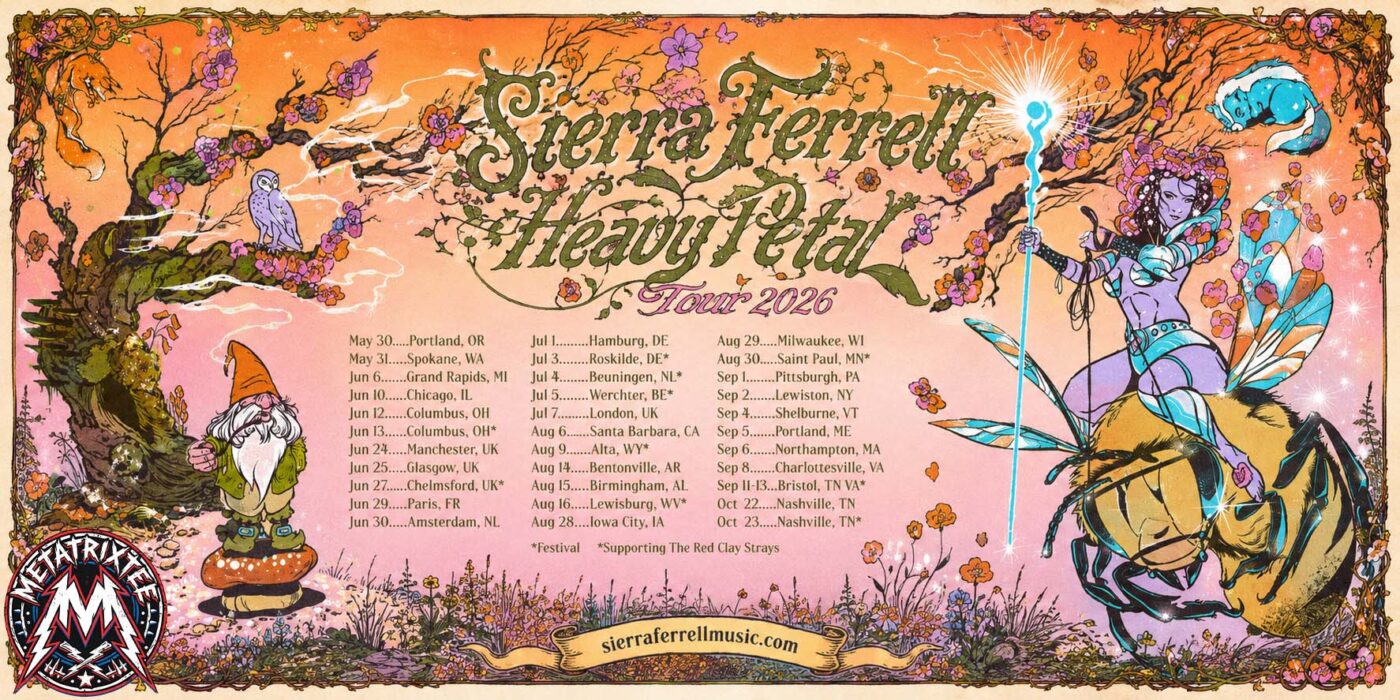
Behind the Smokescreen: How Memory Outgrows the Stage on Sierra Ferrell’s Heavy Petal Tour 2026
Jun
Table of Contents
1. The Sonic Void After the Lights Dim
The silence after a live performance carries a peculiar weight. It is not merely the absence of sound. It is a sudden fracture. Thousands of individuals abruptly drop back into reality. They stand amidst the invisible debris of a dissolved atmosphere. The initial stretch of the year’s performances now transitions into memory. Yet, what lingers in the collective consciousness? It is rarely the flawless execution of a setlist. It is rarely the scale of the lighting rig. The true residue is an intangible spiritual resonance. This subterranean shift alters our collective pulse long after we disperse into the cold night air.
The Illusion of Metrics
The modern entertainment industry heavily prioritizes quantifiable metrics. Executives track ticket yields, acoustic decibels, and social media impressions. Yet, these structural achievements often produce a fleeting paralysis of the senses. They fail to leave a permanent indentation on the psyche. A performance truly ends when the audience finds no umbilical cord linking them to the stage. However, the current cultural wave suggests an entirely opposite trajectory. Audiences exit venues in a state of suspension. They feel as though they just participated in an ancient communal rite. The music itself was merely a vessel to unlock hidden, internal densities.
A Contrast in Spectacle
Contrast this with the stadium-sized pop spectacles that dominate contemporary touring. Those events rely heavily on synchronized laser grids or massive LED arrays. In those spaces, the spectator stays visually sated. Yet, they frequently leave with a hollow equilibrium. It feels akin to consuming a feast built entirely on synthetic ingredients. Conversely, the environment cultivated over the past few weeks of this tour feels radically unvarnished. It dissolves the physical border between the microphone and the back row. This deliberate structural restraint does not diminish the evening. Instead, it forces the eye back to the singular, unedited energy of human presence. This psychological shift in how we consume live art opens a broader interrogation into what our gathering spaces are actually becoming.
3. The Heavy Petal Aesthetic and the Need to Belong
An aesthetic movement only gains cultural traction when it visualizes a generation’s unspoken desire. It must map the need for identity and shelter. The phrase “Heavy Petal” is more than a clever stylistic juxtaposition. It represents a deliberate collision. It balances the delicate, bruising vulnerability of flora against the ancient, unyielding weight of the soil. Contemporary monoculture feels increasingly slick, sterile, and artificial. Against this backdrop, a return to the tactile, the frayed, and the historical offers a profound visual relief. The audience does not merely want to hear the philosophy. They want to see it reflected in what they wear and what they hold.
Citizenship of the Tribe
The choice to adopt vintage silhouettes or intricate botanical embroideries is an act of conscious intention. Fans choose time-worn textures before stepping into the venue. It is a silent signaling of citizenship within a specific cultural tribe. Style functions here as an unvoiced dialect. It allows disparate souls to recognize one another within a crowded landscape. This visual kinship does not emerge from the top-down mandates of commercial stylists. Aggressive promotional campaigns do not create it. Instead, it grows organically from a shared reverence for the handmade. It anchors people in an age of automated production.
The Inversion of Subcultural Armor
Consider how subcultures like Goth or Punk historically armored the youth in leather and steel. They built a visual wall against their environments. A similar, inverted mechanism operates within the modern Folk-Country landscape. Instead of the destructive alienation of punk, this movement seeks restoration. It pursues healing through an intentional re-linking to natural elements and inherited traditions. The clothing and the lifestyle do not stop at the venue doors. They bleed into the streets. Fans carry them into office spaces and lecture halls as an extended defiance against modern monotony. This impulse to preserve the feeling inevitably drives a desire to possess a tangible piece of the experience.
4. Anchoring the Transient: Taking the Concert Home
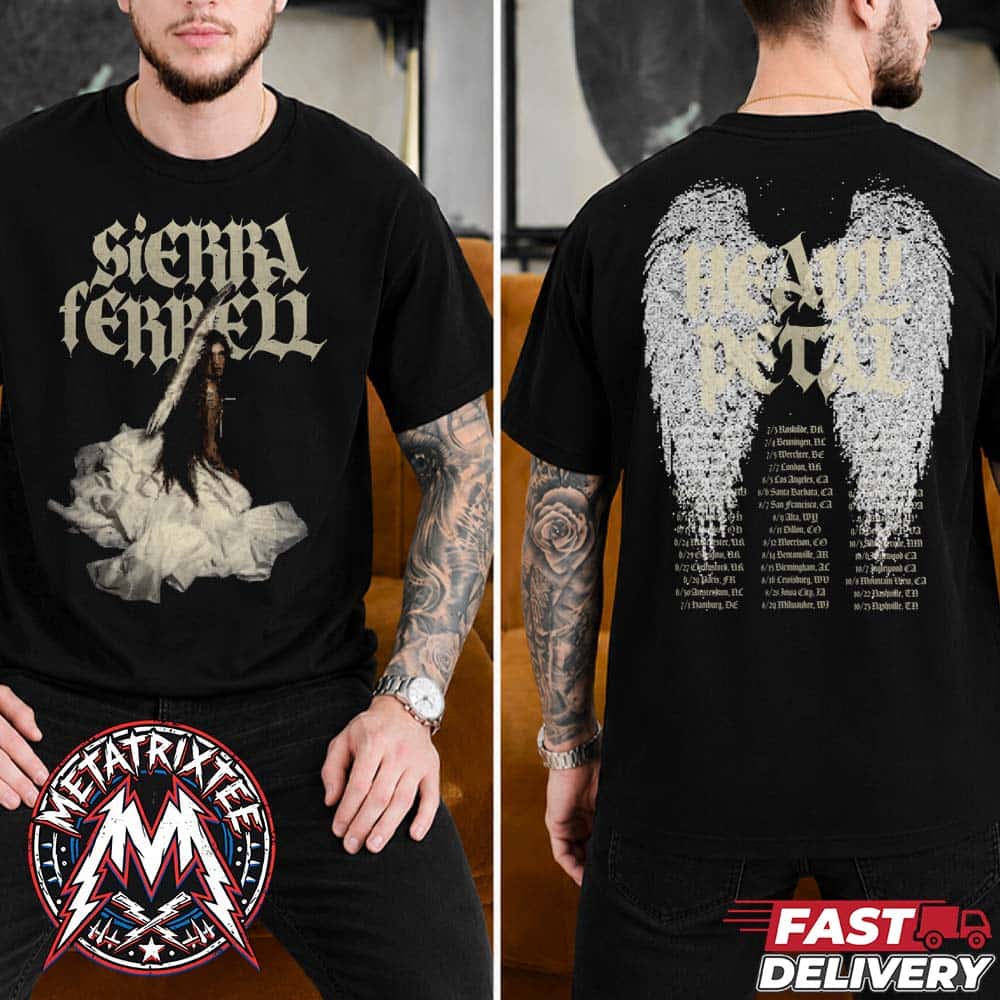
A beautiful, transient moment evaporates quickly. This anxiety drives our human impulse to materialize our internal states. Printed tour dates, limited lithographs, and small tokens of commemorative apparel are not merely transactions of commerce. They function as memory anchors. People endure long queues for a specific reason. They do not buy a simple blend of cotton or ink. They secure physical evidence that says: “I was present when the air changed.” Long after the amplifiers are crated and the stage boards are bare, a faded shirt remains. A creased ticket stub stands as the sole line of communication to that temporary state of grace.
The Spiritual Currency of the Artifact
This deep emotional investment explains why artifact-driven designs connected to the sierra ferrell tour 2026 command such reverence within the community. These objects do not obey the rules of fast fashion. Fast fashion relies on rapid obsolescence to generate profit. Instead, these garments gain spiritual currency as they age. They absorb the specific geometry of the wearer’s life. They hold the memory of the crowd and the residual warmth of the live room. Slipping into a piece of tour apparel during a normal domestic routine is a quiet act of time travel. It imports the sacred space of the concert into the secular space of the everyday.



The Luxury of Tactile Decay
This behavior mirrors the older generations who collected original vinyl pressings or hand-stamped bootleg cassettes. Today, streaming conglomerates flatten music into invisible data streams on remote servers. In this environment, tactile interaction has become a rare luxury. A digital file cannot fray at the edges. It cannot carry a stain from a dropped drink. Because it cannot scar, it lacks humanity. Possessing an object that can decay alongside us provides an anchor against the accelerated velocity of modern time. These physical remnants are quietly dictating how we imagine the survival of live music itself.
5. Whispers of the Future of Live Performance
The quiet, stubborn success of this style of touring serves as a necessary warning. It speaks directly to an industry increasingly reliant on automated perfection and algorithmic predictability. The future of the live medium does not belong to the venue with the highest pixel density. It does not belong to complex spatial audio arrays. Audiences are quietly retreating from performances that feel pre-programmed down to the millisecond. They reject shows where engineers eliminate human error to accommodate automated lighting cues. What the modern soul craves is the beautiful hazard of the unedited. We want a gravelly catch in the throat, a misplaced guitar chord, or a moment where the performer looks at the room without a script.
The Valuation of Raw Authenticity
According to current live music reports from publications like Rolling Stone, a shift is occurring. A generation of concertgoers who value raw authenticity above all else is erasing the line separating legacy genres from roots music. The live industry stands at a historical crossroads. One path leads toward the complete financial optimization of concerts into virtual reality theme parks. The other path protects the unadorned room where humans interact through raw acoustics. The current landscape proves that the second option remains viable. It is entirely capable of sustaining a fierce, generational loyalty.
The Shield Against Technological Replacement
Imagine a future where promoters render every performance via flawless holograms. Virtual artists remain frozen in their physical prime and perform without fatigue. It is a promoter’s dream, but it represents an artistic graveyard. The singular value of live music rests on its non-repeatability. An artist might play the exact same sequence of notes the following evening. Yet, the moisture in the air, the temper of the crowd, and the variables of human emotion have fundamentally shifted. This beautiful volatility is the only shield live music has against technological replacement.
6. The Precious Residue
The last production trucks eventually roll out of the venue gates. The wheat-pasted posters begin to peel under the summer rain. At this moment, the true performance begins its second life inside the memory of the observer. A great concert does not conclude when the house lights come up; it simply disperses. The phantom vibrations of the fiddle and the wooden box resonance of the acoustic guitar linger. The poetry of the lyric continues to surface during the mundane quiet of ordinary mornings. It serves as a gentle defense against the noise of the world.
Measuring What Matters
Ultimately, the significance of a cultural phenomenon is never found in the charts. The spreadsheets of the management firm do not hold it. Instead, it lives in the specific shape of the emptiness it leaves behind when it moves on. In an era where everything accelerates, society designs products for easy disposal. Finding an emotional waypoint deep enough to make you pause for weeks is a rare piece of luck. The petals of this tour may eventually scatter. However, the emotional topsoil they leave behind will continue to sustain the community for a long time to come.
7. Frequently Asked Questions (FAQ)
What is the core philosophy behind the “Heavy Petal” concept?
The “Heavy Petal” aesthetic represents an intentional balance of opposites. It marries the delicate, organic vulnerability of traditional folk imagery (the petal) to the raw, independent spirit of modern roots music (the heavy). It serves as both a visual style and an emotional framework for the live experience.
Why are modern audiences moving away from high-tech concert productions toward roots music?
Daily life has become increasingly digital and mediated by screens, causing widespread sensory fatigue. Traditional live performances offer a necessary return to raw human presence. They provide genuine acoustic instrumentation and shared communal spaces that digital technology cannot simulate.
How does tour merchandise transition from commercial product to cultural artifact?
Within intentional music communities, merchandise acts as a physical repository for memory. It serves as a tangible anchor for an ephemeral experience. This allows the concertgoer to carry the emotional atmosphere of the venue back into their daily lives as a permanent badge of identity.
