Music News
Echoes in the Concrete: The Night Bucharest Burned with Metallica
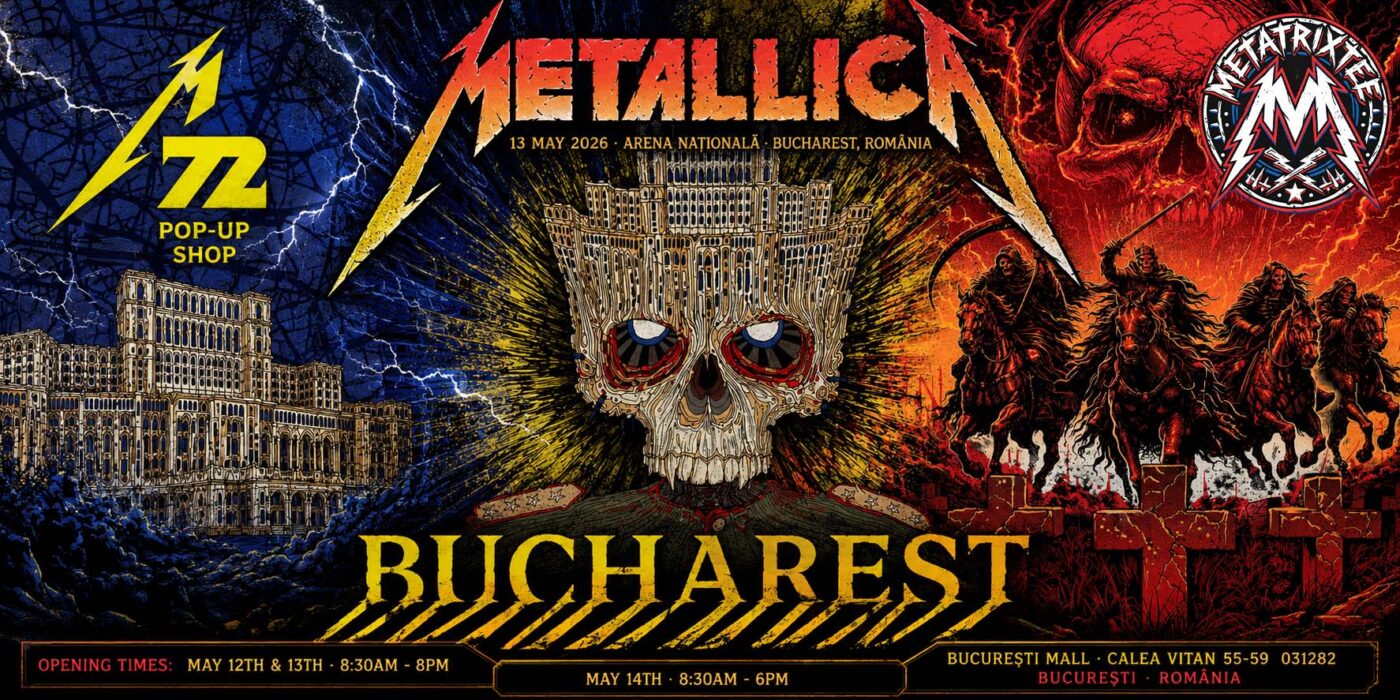
May
A sensory look back at a record-shattering evening where the M72 World Tour met the raw, unyielding spirit of Romania.
Table of Contents
- Bucharest Before the Storm
- When the Stadium Finally Exploded
- The Songs That Hit the Hardest
- Metallica and the Romanian Crowd
- Long After the Final Encore
Bucharest Before the Storm
Heavy, unseasonable heat trapped inside Bucharest streets. Long before the first guitar chord cut through the air, the city felt compressed, coiled like a spring. A slow-moving sea of black shirts outside Arena Națională stretched as far as the eye could see, slowly overtaking the concrete boulevards. Tired fans sitting on concrete barriers, nursing lukewarm drinks, watching plastic beer cups rolling through the crowd as a late spring breeze finally stirred the heavy air. You could hear the distant chants before sunset—low, guttural, vibrating through the metal security gates. There was a thick, nervous electricity before the lights disappeared, a collective realization that something monumental was about to swallow us whole.
Moving past the security checkpoints felt like crossing a border into a separate, much louder reality. The sheer physical scale of the architecture inside was staggering. A massive, hollow ring dropped squarely in the center of the pitch, transforming the cavernous stadium into a colossal gladiatorial arena.
The legendary Snake Pit sat right in the center, a restless ocean of die-hard fans surrounded on all sides by the circular stage. Towering cylindrical screens stretched up toward the open sky like dark monoliths, waiting to ignite. Walking around the concourse, the fashion of the night was its own living subculture. Weathered battle jackets stitched with decades of heavy metal history mixed with pristine, newly bought Metallica M72 Bucharest merch. People from every corner of Eastern Europe—and far beyond—stood shoulder to shoulder, their vintage band shirts damp with sweat before the music even began. The sense of anticipation for this stop on the Metallica Europe Tour 2026 was tangible, a shared breath held by tens of thousands who had waited years for this exact night.
When the Stadium Finally Exploded
By the time Knocked Loose and Gojira finished tearing through their opening sets, leaving the air thick with the scent of spilled beer, sulfur, and raw adrenaline, the twilight had fully settled over the capital. The stadium was packed to its absolute breaking point. Later, the official statistics would confirm it—this was the fastest-selling show ever in Romania and the largest attendance for a single event in the history of the National Stadium, organized by Live Nation. But in that moment, cold numbers didn’t mean a thing.
Only the crushing pressure of human bodies did.
Then, the sudden, absolute darkness.
The roar that erupted from the crowd wasn’t just loud; it was violent. A physical force that hit your chest and stayed there, rattling your ribs. When the opening notes of Ennio Morricone’s The Ecstasy of Gold began to echo from the towering sound system, the entire structure of the Metallica Arena Națională setup seemed to sway. The massive circular video screens flickered to life, bathing sixty thousand ecstatic faces in a cold, cinematic glow. The nervous energy that had been building all afternoon in the suffocating heat spilled over. People were screaming, embracing strangers, throwing their fists toward the open sky as four figures walked out onto the ring, cementing the chaotic reality of Metallica M72 Bucharest.
The Songs That Hit the Hardest
They didn’t ease into it. The band launched straight into Creeping Death, and the stadium instantly turned into a swelling, chaotic vortex of movement. The sound was devastatingly loud, a thick wall of thrash metal refined by decades on the road. Lars Ulrich’s drums thudded like a heavy pulse beneath the vibrating concrete, while James Hetfield’s rhythm guitar cut through the night with a razor-sharp bite.
The setlist felt less like a calculated retrospective and more like a series of emotional landmines designed to detonate the crowd. When the band tore into Lux Æterna, the speed was blistering, a shot of pure, unadulterated energy that kept the fire of the Metallica M72 World Tour burning bright. But it was the darker, more introspective masterpieces that truly tore the skin off the evening.
Fade to Black was an emotional crucible. As Kirk Hammett’s melancholic opening solo soared over the stadium, thousands of lighters and phone screens illuminated the dark bowl, casting long, flickering lights across the pitch. You could hear exhausted voices cracking around you, people singing every lyric not just as a song, but as an old wound being reopened and healed in real-time.
Then came the war.
The familiar, chilling sounds of gunfire and helicopter rotors echoed through the stadium, signaling One. The production went into overdrive. Towering pillars of fire erupted from the stage, casting intense, blinding heat across the floor, followed by sharp green lasers that sliced through the smoke-filled air. The transition into the iconic, thundering machine-gun breakdown was chaotic and perfect, a sensory assault that left everyone breathless. They followed it up with the relentless, building groove of Seek & Destroy, before the ultimate climax of Master of Puppets and Enter Sandman threatened to tear the structure completely apart, accompanied by bursts of fireworks that lit up the open roof.
Metallica and the Romanian Crowd
There is a specific, feral intensity to an Eastern European metal crowd that you cannot replicate anywhere else. For Romania, a country where rock music historically carried the weight of quiet rebellion, hosting a show of this magnitude is deeply personal. This performance marked the fifth time the band had played a gig in Bucharest since their legendary first visit back in 1999 during The Garage Remains the Same Tour.
The fervor in the air felt like a direct continuation of the seismic energy that had gripped the region just weeks prior, reminiscent of when the Aegean shook as Metallica evaporated a 16-year drought in Athens. It seems the Mediterranean and the Balkans were locked in a silent competition to see who could scream the lyrics louder.
Throughout the night, Hetfield kept stopping to look out at the sea of humanity, visibly moved by the volume of the response. The collective crowd chants weren’t just standard concert call-and-responses; they were booming, synchronized hymns that echoed through the surrounding neighborhoods of Bucharest long after dark. During the heavy, crushing rhythm of Sad But True, the entire floor moved as a single, undulating organism. It became clear why Metallica Bucharest 2026 had become such an unforgettable milestone on the official tour page.
Long After the Final Encore
And then, the house lights came up, cruel and sudden, exposing the wreckage of the night.
The band spent a long time on stage, throwing guitar picks, sharing smiles, and thanking the exhausted masses, but eventually, the stage cleared. The silence that followed wasn’t quiet. It was filled with the collective hum of sixty thousand people shuffling toward the exits, their ears ringing with a relentless, high-pitched buzz that would linger for days.
Walking away from the stadium, the air outside felt cooler, though the concrete beneath our feet still seemed to vibrate with the ghost of Rob Trujillo’s bass lines. Empty plastic cups crunched underfoot like dry leaves. Voices were completely gone, replaced by tired smiles and silent nodding heads in the dark along Boulevard Basarabia. The city of Bucharest received its slice of rock history on May 13th, and as the crowds dispersed into the dimly lit side streets, the memory of the evening remained trapped in the air—gritty, heavy, sweat-soaked, and completely unforgettable.