Music News
The Mid-June Takeover: Inside Metallica’s M72 Two-Night Stand at Puskas Arena
Jun
Table of Contents
Why Metallica M72 Budapest 2026 Feels Different
When a band has been touring global stadiums for over four decades, specific milestones begin to carry more weight than others. Metallica’s arrival in Hungary this June isn’t just another calendar entry in a massive summer routing. It marks the band’s return to the Hungarian capital after an eight-year absence, bringing a deeply altered staging concept and an evolved production footprint that has spent the last few years completely changing how heavy music occupies stadium spaces.
The M72 World Tour, named in reference to their eleventh studio album 72 Seasons, operates on an entirely unique structural philosophy. Rather than setting up, tearing down, and moving to the next city overnight, the tour embeds itself into specific locations, transforming them into temporary cultural hubs for the band’s global community.
Budapest occupies a distinct position among the European stops on this 2026 leg. Geographically positioned as a central crossroads for fans travelling from across Eastern Europe, the Balkans, and Austria, the city has historically welcomed heavy music with a raw, unfiltered enthusiasm. While heavy production footprints frequently visit Western European hubs, Central Europe often has to wait years between major structural stadium installations of this magnitude. This long-simmering anticipation gives the upcoming mid-June dates an intensity that differs substantially from standard festival appearances or single-night arena shows.
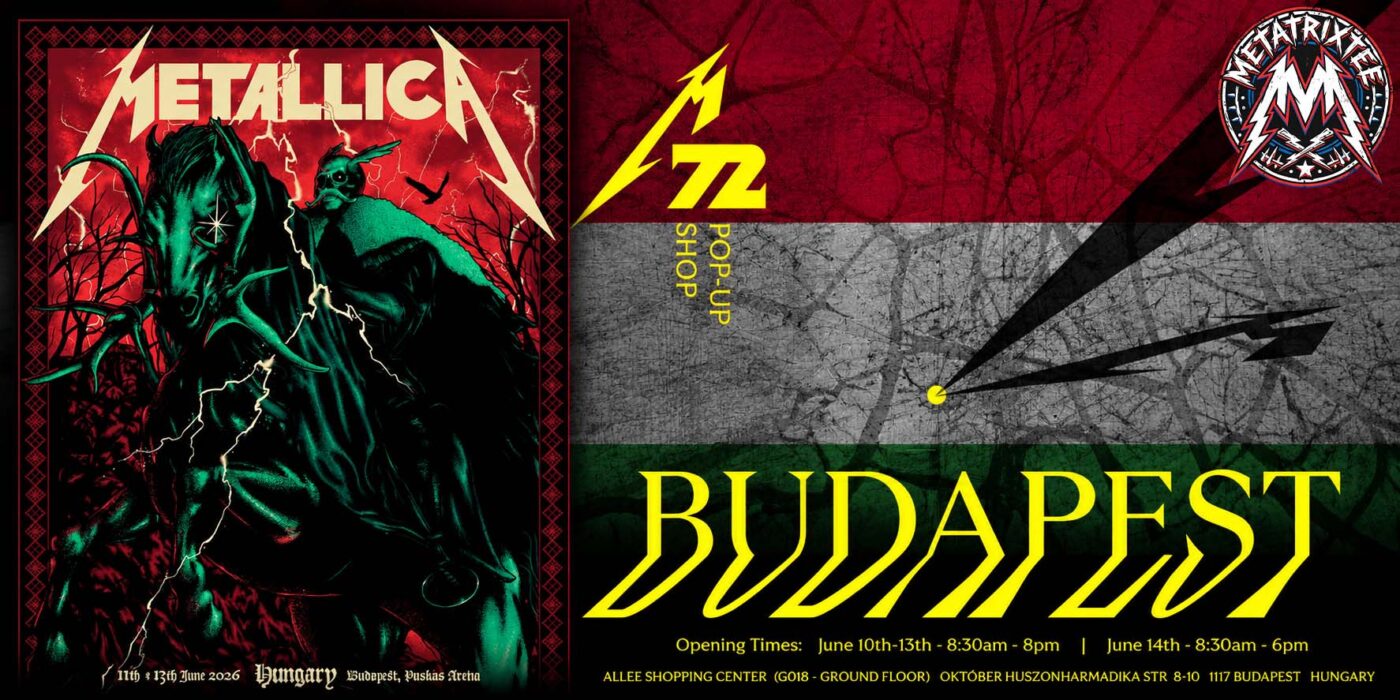
Two Nights At Puskas Arena: June 11 & June 13, 2026
The setting for this double-header is the Puskas Arena Official stadium, a venue renowned for its architectural scale and modern acoustic design. Rebuilt on the hallowed ground of the old Népstadion and opened in late 2019, the stadium stands as a massive, multi-tiered cauldron designed to maximize sightlines and sound projection. For a performance of this magnitude, the physical space itself becomes a vital participant in the experience.
Inside the stadium, the focal point will be the tour’s signature ring-shaped, in-the-round stage setup. By shifting the performance space to the exact center of the stadium floor, the traditional barrier between the band and the audience is effectively broken. This configuration includes the famous “Snake Pit” placed right in the center of the ring, giving a segment of the audience a 360-degree perspective of the performance. Towering circular video screens and massive audio towers ring the floor, ensuring that even those in the highest tiers of the upper deck receive direct, undistorted sound.
The significance of a two-night stop in a single stadium cannot be overstated. It creates a temporary micro-community within the city. For forty-eight hours, the surrounding districts, local transport links, and public spaces fill with thousands of individuals sharing a singular focus. The pressure of a traditional one-night event—where a band must deliver their entire legacy in a tight two-hour window before rushing to pack the trucks—dissipates. Instead, the narrative unfolds across two distinct evenings, giving the entire weekend a spacious, festival-like atmosphere.
Understanding The No Repeat Weekend Concept
The core operational principle of the M72 tour is the “No Repeat Weekend.” It is a bold, structurally complex approach to stadium-scale touring that demands massive preparation from both the musicians and their technical crew. The rule is simple yet absolute: across the two scheduled nights, the band will not play the same song twice.
If a track is performed on Thursday night, it is completely off the table for Saturday. This means the total pool of music brought to the stage across the weekend spans at least 30 to 32 completely different songs. Furthermore, the supporting lineups change entirely between the two dates. On June 11th, the evening opens with the ferocious energy of Pantera and the theatrical metal of Avatar. When the gates reopen on June 13th, the musical landscape shifts toward the technical progression of Gojira and the visceral intensity of Knocked Loose.
Budapest will not exist in isolation—earlier M72 stops already showed how each city creates its own atmosphere and identity. Observers tracking the tour’s progression noticed that the physical shape of the city and the local culture dictate the pre-show energy, a phenomenon vividly recorded during Metallica and the M72 ritual in Bologna. Just as that Italian stop developed its own specific sonic footprint based on the crowd’s energy, the dual dates at the Puskas Arena will offer two completely contrasting musical movements, ensuring that those attending both nights experience two entirely individual stadium events.
What Fans May Expect From The Budapest Shows
While it is impossible to predict an official setlist—as the band actively shifts pieces of their catalog around until the hours leading up to showtime—recent touring cycles offer a fascinating glimpse into how Metallica balances their eras under the No Repeat rule. The sets are generally structured to honor their foundational thrash roots while leaving substantial room for deep cuts and modern material.
Audiences typically see the monumental tracks from Master of Puppets, Ride the Lightning, and the self-titled “Black Album” split deliberately across the two nights. For example, if a massive anthem like “Enter Sandman” closes out one evening, the other night might rely on the sweeping progression of “Master of Puppets” or the driving rhythm of “Seek & Destroy” to anchor the finale.
The structural beauty of this format lies in the sudden resurrection of rare material. Longtime followers often keep a close eye on the mid-set slots, where the band regularly rotates instrumental pieces, speed-metal tracks from Kill ‘Em All, or heavy selections from Load and Reload. Newer tracks from 72 Seasons, such as “Lux Æterna” or the title track itself, provide a sharp, contemporary edge to the sets, demonstrating how the band integrates their modern creative output directly alongside compositions written forty years prior.
Preparing For The Concert Weekend
Attending a massive stadium double-header requires careful logistical planning to avoid unnecessary stress. Because Puskas Arena does not offer dedicated public parking for event attendees, driving a personal vehicle directly to the venue is highly discouraged. The surrounding neighborhood consists primarily of residential streets with strict, paid parking regulations that fill up hours before showtime.
Fortunately, Budapest’s public transit network is incredibly efficient. The stadium is easily accessible via the M2 metro line (stopping at Puskás Ferenc Stadion), the modern Tram Line 1, and numerous trolleybus routes running along Dózsa György út and Stefánia út. Arriving early is essential, particularly for floor ticket holders who need to navigate stadium security checks and find their preferred vantage point around the massive circular stage structure. Gates generally open in the late afternoon to accommodate the early supporting acts.
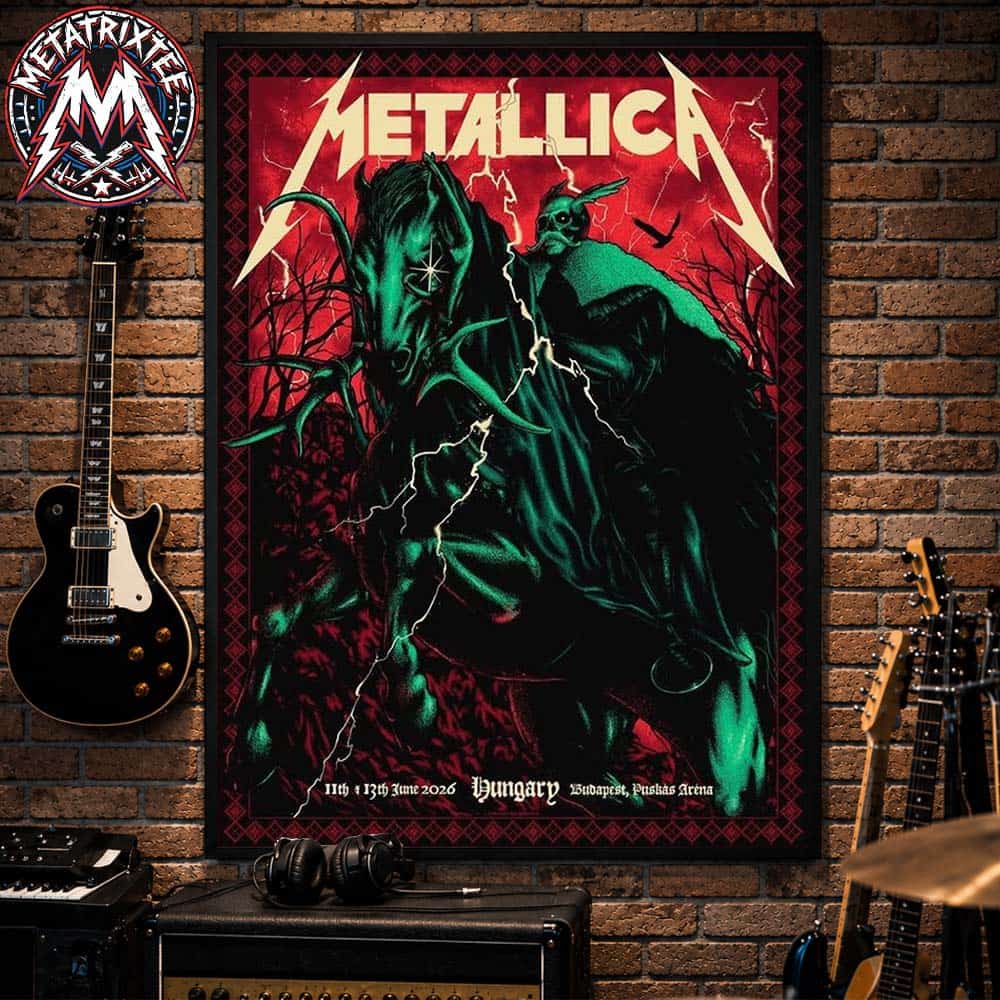
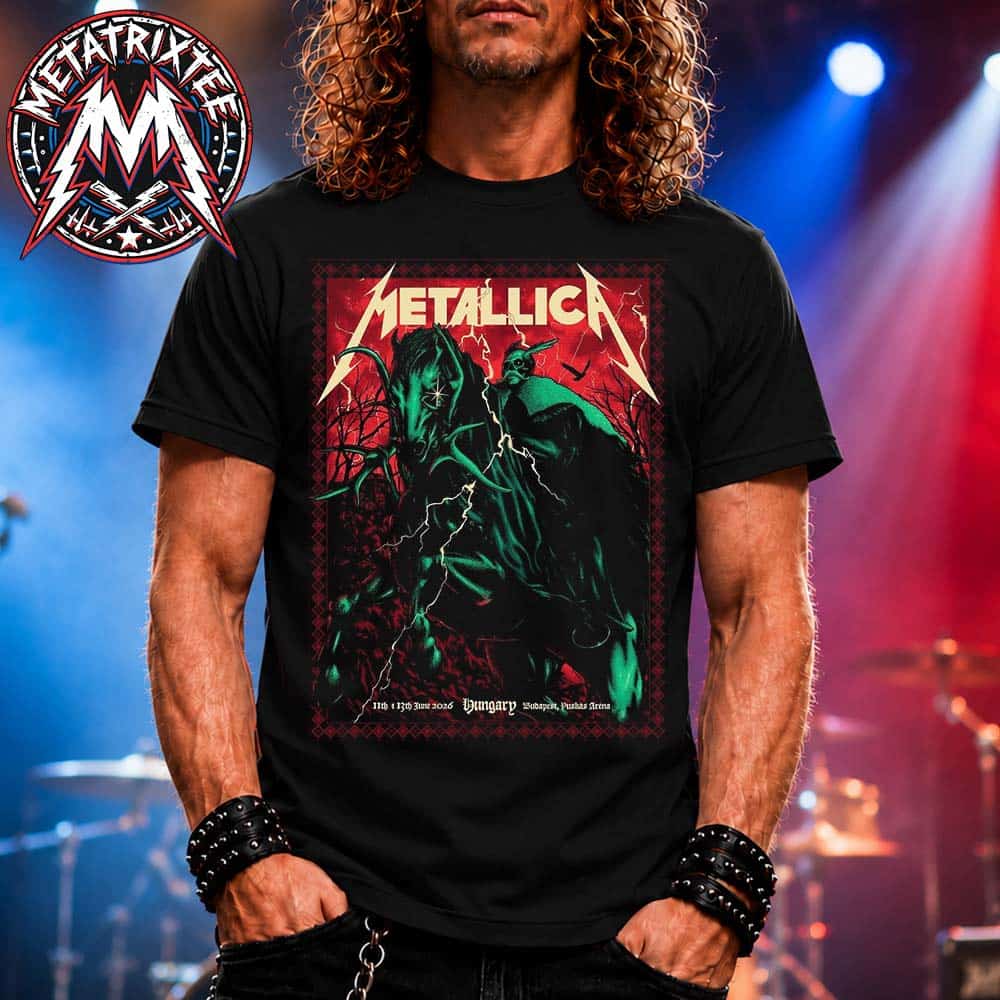
Managing your gear and planning for event merchandise is another crucial element of the weekend. Official tour merchandise trucks are typically positioned both outside the stadium gates and at various concourse levels inside. For those looking to secure event-specific apparel without spending valuable stadium time standing in long lines, exploring a dedicated official-inspired Metallica Budapest apparel collection ahead of time can streamline your preparation.


Keep in mind that Puskas Arena operates as a strictly cashless venue; all food, beverage, and merchandise purchases require a credit card, debit card, or a pre-loaded event card. Additionally, stadium security enforces strict limitations on bag sizes—generally permitting nothing larger than an A4 sheet of paper—so traveling light is the best strategy for a smooth entry.
Frequently Asked Questions
Can I purchase a single-day ticket for either the Thursday or Saturday show?
Yes. While the tour was initially launched primarily with two-day ticket packages to encourage the full weekend experience, single-day tickets for both the June 11th and June 13th dates are available through official ticketing channels like Metallica Official.
Are the opening acts the same for both nights at Puskas Arena?
No, the supporting lineups are entirely different for each show. Thursday, June 11th features Pantera and Avatar. Saturday, June 13th features Gojira and Knocked Loose.
Is there an age restriction for entering the stadium floor?
Yes. For safety reasons due to the massive crowds and high audio volume, children under the age of 6 are strictly prohibited from the floor standing areas. Seated areas are highly recommended for families, and all attendees under 16 must be accompanied by an adult.
What happens if it rains during the concert?
Panels on the roof structure cover most seated areas, but the pitch (floor) area is open-air. The concert will proceed rain or shine. Attendees should check local weather forecasts and dress in appropriate layers, keeping in mind that umbrellas are typically prohibited inside stadium gates for safety and visibility reasons.
Conclusion
Metallica’s upcoming two-night stand in Budapest represents more than just a standard stop on a commercial tour itinerary. By utilizing the No Repeat Weekend format, the band challenges themselves creatively while offering the audience an immersive, multi-day musical gathering that honors every era of their expansive history. As the production trucks roll into the Puskas Arena this June, Central European fans are set to witness a thoughtfully curated celebration of heavy music—one that will leave an enduring mark on the city’s rich concert history long after the final chords fade into the Hungarian night.
